
“The Falling Man” is one of the most haunting and iconic photographs from the September 11, 2001, terrorist attacks on the World Trade Center in New York City. Captured by Associated Press photographer Richard Drew, the image shows a man falling from the North Tower.
This photograph symbolizes the profound human tragedy and the desperate choices faced by those trapped above the impact zone. It encapsulates the horror, grief, and helplessness experienced during the attacks, serving as a stark reminder of the event’s impact on individuals.
In 2001, the world was relatively at peace compared to previous global conflicts. The United States was seen as a powerful nation with significant global influence. However, the events of September 11, 2001, shocked the world and marked a pivotal moment in modern history. The terrorist attacks were unprecedented in their scale and impact on American soil, resulting in the deaths of nearly 3,000 people.
This event led to a profound shift in global politics, security policies, and public perception of safety. Domestically, the attacks united Americans in grief and resolve, leading to increased patriotism and support for the subsequent War on Terror.
The photograph of “The Falling Man” was first published on September 12, 2001, in newspapers across the United States, including The New York Times. The image quickly spread, capturing the public’s attention and igniting debates about its appropriateness.
While some felt the image was too graphic and disturbing, others saw it as a necessary portrayal of the human cost of the attacks. The photograph became a controversial but powerful representation of the tragic choices faced by those trapped in the Twin Towers.
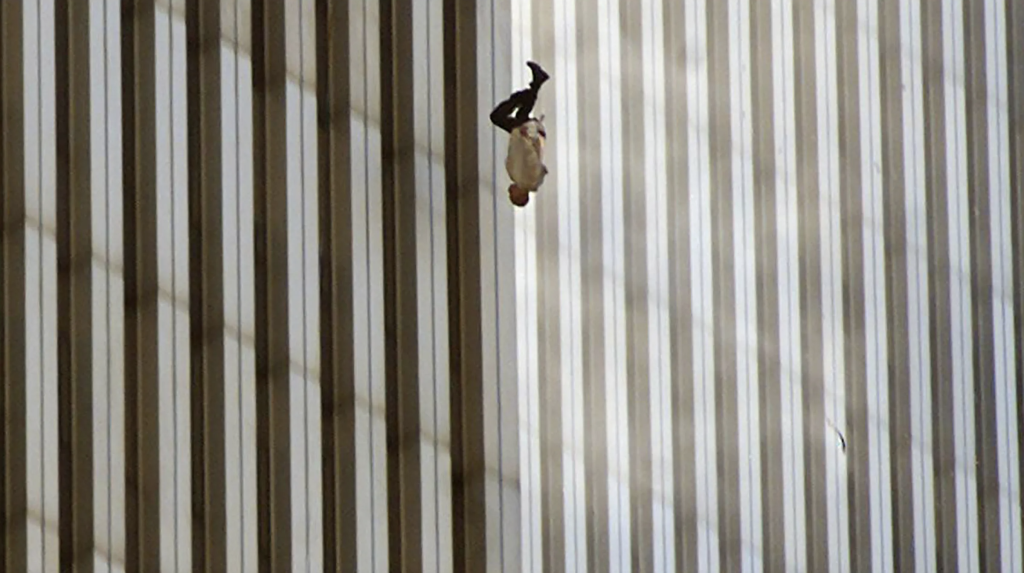
Photographer: Richard Drew
Date: September 11, 2001
Location: North Tower, World Trade Center, New York City, USA
Agency: Associated Press
On the morning of September 11, 2001, as the world watched in horror, Richard Drew captured a series of photographs of people falling from the North Tower. “The Falling Man” stands out for its composition and the calmness of the subject amidst the chaos. The man’s identity remains uncertain, adding to the photograph’s poignancy.
The image shows him falling headfirst in a seemingly peaceful descent, contrasting sharply with the surrounding destruction. This photograph symbolizes not only the terror of that day but also the individual lives lost and the personal tragedies within the larger catastrophe.
“The Falling Man” remains a powerful and controversial image, representing the unimaginable decisions faced by those trapped in the towers. It serves as a reminder of the human cost of terrorism and the individual stories of loss and grief. The photograph is a testament to the personal and collective impact of the September 11 attacks, symbolizing both the fragility of life and the resilience of the human spirit.
The image continues to provoke discussions about media ethics, the portrayal of human suffering, and the legacy of 9/11. It is an enduring symbol of that tragic day, prompting reflection and remembrance.
Full Name: Richard Drew
Birth: 1946, New York City, USA
Richard Drew, born in 1946 in New York City, is a veteran Associated Press photographer. He has captured numerous significant events throughout his career, but none as impactful as September 11, 2001. Drew was covering a fashion event when he was redirected to the World Trade Center following the attacks. Using his instinct and experience, he documented the unfolding tragedy, capturing some of the most memorable and distressing images of the day.
Despite the controversy surrounding “The Falling Man,” Drew’s work is recognized for its raw honesty and historical significance. His photograph remains one of the most enduring images from 9/11, capturing a moment that continues to resonate deeply with viewers worldwide.